NWHF Medallion
Search the National Women's Hall of Fame Web Site
FAQ CONTACT HOME
NWHF Medallion Women of the Hall Nominate Support Shop Visit Our History Our Mission News & Events Book of Lives & Legacies

NWHF Medallion
Women ogf the Hall

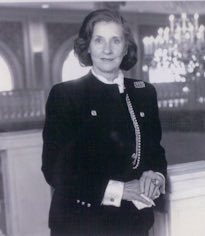
Florence Wald  (1916 - 2008)
Former dean of the Yale School of Nursing and founder of the Hospice movement in America, for which she was awarded the honorary Doctorate of Medical Sciences by Yale University in 1995. As a nurse, she went to Europe to study Hospice from the ground up.

Lillian Wald  (1867 - 1940)
Nurse who organized the public health nursing service and the Henry Street Settlement in New York City to meet the needs of the urban poor. Wald created public health nursing services for many groups, and established the Public Health Nurses, known today as Visiting Nurse Service.

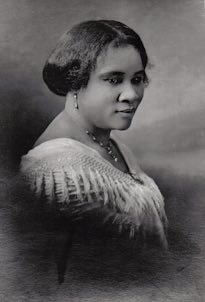
Madam C. J. Walker  (1867 - 1919)
Sara Breedlove, a Black entrepreneur considered the first African American woman to become a millionaire. She did this by devising a hair care and grooming system for African Americans and pioneered a door-to-door sales approach. The daughter of former slaves, Walker became an advocate for positive social change as well as a philanthropist.

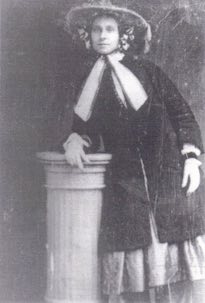
Mary Walker, M.D.  (1832 - 1919)
First female surgeon in the U.S. Army, she continually crossed the Confederate lines to treat civilians. After being taken prisoner in 1864 and imprisoned in Richmond, she was awarded the Congressional Medal of Honor, the first woman to receive this award. In 1917, her medal, along with 910 others, was taken away when Congress revised the standards to include only "actual combat with the enemy." She refused to return the medal, wore it until her death, and it was finally awarded to her posthumously.

Emily Howell Warner  (1939 - )
In 1973 Emily Warner became the first American female commercial airline pilot when Frontier Airlines broke the barrier against hiring women pilots. She later became the nation's first woman airline captain, also at Frontier Airlines.

Mercy Otis Warren  (1728 - 1814)
Poet, dramatist, satirist and historian Mercy Otis Warren was widely known for using her pen to share her strong political views. She advocated for national independence and opposition to royal tyranny through works such as The Adulateur and The Group.

Faye Wattleton  (1943 - )
Nurse who was the first woman since founder Margaret Sanger, and first African American to become president of the Planned Parenthood Foundation. Wattleton developed Planned Parenthood into an influential nationwide organization.

Annie Dodge Wauneka  (1910 - 1997)
First woman elected to the Tribal Council, she became determined to lead the fight against tuberculosis among the Navajo. She wrote a dictionary to translate English words for modern medical techniques into Navajo, and hosted a radio broadcast in the Navajo language to explain how modern medicine could help in better care for pregnant women and new babies and other family health problems.

Ida B. Wells-Barnett  (1862 - 1931)
African American leader, anti-lynching crusader, journalist, lecturer and community organizer who fought social injustice all her life. Wells-Barnett sued a railroad over segregated seating, criticized segregated education and became editor and part owner of a newspaper. The horrors of lynching inspired her to lead a major effort to abolish the atrocity.

Eudora Welty  (1909 - 2001)
One of the most significant writers in the 20th century, she won many notable literary prizes, including the Pulitzer Prize for her novel The Optimist's Daughter. Her work is marked by what critic Jonathan Yardley called an "abiding tolerance...a refusal to pass judgement on the actors in the human comedy." and it transcends generations and national boundaries. In 1998, the Library of America recognized her literary accomplishments by honoring her as the first living author published in the prestigious Library of America series.

Edith Wharton  (1862 - 1937)
American novelist and short story writer of the 20th century. The first woman to receive the Pulitzer Prize for fiction (for The Age of Innocence, 1929), Wharton was a prolific writer who averaged more than a book a year after the age of 40 until her death.

Sheila E. Widnall  (1938 - )
Appointed Secretary of the Air Force in 1993 by President Clinton, Widnall became the first woman to hold the position. A world-renowned scientist, she holds three patents in airflow technology. As a current member of MIT faculty, she is internationally known for her work in fluid dynamics, specifically in the areas of aircraft turbulence and the spiraling air flows called vortices created by helicopters.

Frances Willard  (1839 - 1898)
As second president of the Women's Christian Temperance Union (WCTU), she led the largest organization of women in the United States. The WCTU provided a base for the 20th century women's rights movement, supporting, in addition to women's suffrage, broad social reforms such as equal pay for equal work, the eight hour day, and the protection of women and children in the workplace.

Oprah Winfrey  (1954 - )
The first African American woman to own her own television production company and who became television's highest-paid entertainer. As host of the nation's most successful talk show, Winfrey reaches more that 15 million people every day. She is an advocate for ending child abuse, and she contributes generously to colleges and universities.

Sarah Winnemucca  (c. 1842 - 1891)
Native American leader who dedicated her life to returning land taken by the government back to the tribes, especially the land of her own Paiute Tribe.

Victoria Woodhull  (1838 - 1927)
A 19th century reformer, Victoria Woodhull established a reputation as a radical freethinking reformer. She was a suffragist, author, political activist, and the first woman to run for President of the United States (1872).

Fanny Wright  (1795 - 1852)
First American woman to speak out against slavery and for the equality of women. An inspiration to Stanton, Anthony and other women's equality advocates, Wright wrote and spoke out publicly for equal rights for all at a time when women were not accepted in such roles.

Martha Coffin Pelham Wright  (1806 - 1875)
Martha Coffin Pelham Wright was one of five visionary women who organized the first women's rights convention in Seneca Falls, New York in 1848, forever changing the course of American history. She was also one of the few women who attended the 1833 founding meeting of the American Anti-Slavery Society. An accomplished author, she wrote for local and national publications on anti-slavery and women's rights issues. She was elected President of the National Woman Suffrage Association in 1874, serving until her death in 1875.

Chien-Shiung Wu  (1912 - 1997)
Nuclear scientist whose pioneering work altered modern physical theory and changed the accepted view of the structure of the universe. A Columbia University Professor Emeritus, her experiment disproved a supposedly fundamental law of nature. She was one of the few women to be made President of the American Physical Society.


National Women's Hall of Fame    76 Fall Street   P.O. Box 335, Seneca Falls, NY 13148    Phone 315.568.8060
Photo Credits